
The Truth About Microdermabrasion and Why It’s Not Worth the Money

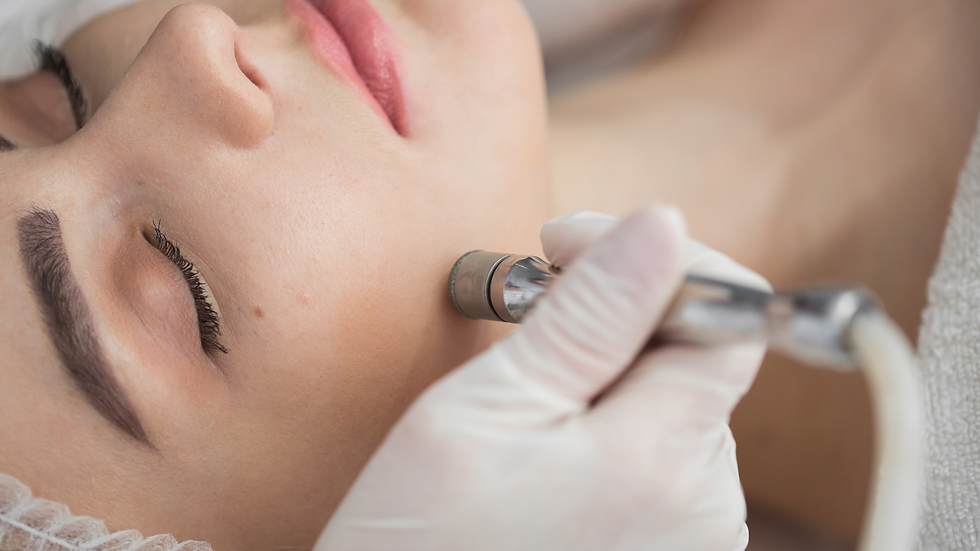
When I was at university, one of my first assignments was to take a deeper look at microdermabrasion and what it actually does to the skin. These days, it’s promoted as a popular and affordable treatment. However, what I discovered back then—and what I still believe now—is that microdermabrasion is, in many cases, a waste of both time and money.
What Microdermabrasion Really Does
In simple terms, microdermabrasion removes the very top layer of the epidermis (the outermost layer of skin). The catch? That layer regenerates within just 24–48 hours. Because this layer is an important part of our skin barrier, the body immediately works to replace it for protection.
This is also why, after using an abrasive exfoliant, your skin may feel instantly smooth, but within a day or two, that roughness quickly returns. Many people then fall into the cycle of over-exfoliating, trying to maintain that fleeting smoothness—often leaving the skin more vulnerable and irritated.
A Better Alternative: Chemical Peels
Chemical peels are a far more effective and versatile option. They can be tailored to suit your skin type and specific concerns, making them a safe choice even for more delicate skin. For example, a gentle lactic acid peel can provide noticeable results without unnecessary irritation.
Unlike microdermabrasion, chemical peels penetrate into the deeper layers of the skin, offering a more thorough removal of dead skin cells and congestion within the pores. This
results in longer-lasting smoothness, clarity, and overall skin health.
Supporting Skin Health
Beyond treatments, maintaining hydration and nourishment is key to healthy, glowing skin. Specialised formulas, such as Toskani Ampoules, are designed to keep the skin hydrated, balanced, and radiant.
Want to read my full research article?
Continue reading here...

The stratum corneum is the most superficial layer of the skin’s epidermis. Made up of Corneocytes, it functions as a waterproof and tough barrier. Microdermabrasion is a wide spread popular treatment to remove Corneocytes through exfoliation, using a hand held device with a suction pressure, propelling a high-speed flow of aluminium oxide or salt crystals (Song et al., 2004).
The structure of the Stratum Corneum is similar to bricks (corneocytes) and mortar (Lipids), connected together by desmosomes. Each corneocytes consists of a keratin micro fibrillar matrix (protein). These are founded by stratified squamous epithelium cells of the epidermis. They go from being a functioning cell to a dead keratinocyte during the skins natural aging process where they lose their ability to proliferate and increase in cell size, flattening to form a corneocyte on the skins surface. Harding (2004) suggests the diverse tissue possesses metabolic activity, which has a unique sophisticated biosensor. It signals underlying epidermis to respond to external stresses, this is a signal that would occur during treatments such as microdermabrasion.
Within the corneocytes is the NMF (natural moisturising factor). This controls the water balance within the stratum corneum, by containing hygroscopic agents. The main type of lipid found in the stratum corneum is ceramides, this lipid surrounds the corneocytes and is organised into lamellar bilayers. The lipid matrix makes up about 20% of the total structure, this lipid bi-layer makes up the plasma membrane. Other lipids that contribute to the structure are fatty acids and cholesterol. Formed beneath the plasma membrane is the Cornified Cell Envelope, this provides the protective barrier against the environment.
Removing the stratum corneum through microdermabrasion is popular treatment for a wide range of cosmetic and medical reasons. By removing the corneocytes within the stratum corneum this can disrupt and compromise the barrier. Depending on the depths of the microdermabrasion it can remove as little as the top corneocytes or as deep as structural lipids bi layers. Removing these layers can be beneficial for penetration of products for cosmetic purposes or administration of drugs through transdermal drug delivery within a medical setting (Andrews et al., 2011).
When the barrier is disrupted the skin can often react by showing erythema. The receptors send a stress signal to the underlying epidermis to encourage cell production and to push skin layers up for recovery. The time frame for this does depend on the depths conducted during the microdermabrasion. A study conducted, Kim (2009) found an increase in TEWL (transepidermal water loss) after 2 passes of microdermabrasion, which was caused by the disruption of the lipid barrier. The barrier of the facial skin was recovered by day 2 following the treatment. After the receptor signals have been received the cells of the stratified squamous epithelium progress, this is a process that is happening all the time in the human body. The functioning cell increases in cell size and then flattens to form the corneocytes, while moving to the superficial layers of the skin, before shedding off in the natural process.
In Conclusion microdermabrasion does disrupt the skins barrier resulting in TEWL when the stratum corneum is removed. The body’s response time in skin barrier recovery is prompt with stress signals immediately getting to work to recover the skins barrier of the stratum corneum. Although most clients desired results are for a skin barrier with less corneocytes for a smoother appearance. The stratum corneum’s main function is to provide a barrier against the outside elements protecting the layers, that lie beneath the body’s internal structure. Disrupting this can lead to skin concerns or even medical conditions. Because of these concerns, this is where the body reacts in protective mode and builds another barrier. Although microdermabrasion is a safe and healthy skin procedure it is important to understand that other external factors such as a healthy diet and balanced skin routine should be encouraged for overall skin and body health.
References
Andrews, S., Lee, J. W., & Prausnitz, M. (2011). Recovery of Skin Barrier After Stratum Corneum Removal by Microdermabrasion. AAPS PharmSciTech: An Official Journal of the American Association of Pharmaceutical Scientists, 12(4), 1393. https://doi-org.wallaby.vu.edu.au:4433/10.1208/s12249-011-9715-x
Kim, H. S., Lim, S. H., Song, J. Y., Kim, M.-Y., Lee, J. H., Park, J. G., Kim, H. O., & Park, Y. M. (2009). Skin barrier function recovery after diamond microdermabrasion. The Journal of Dermatology, 36(10), 529–533. https://doi-org.wallaby.vu.edu.au:4433/10.1111/j.1346-8138.2009.00695.x
Andrews, S. N., Zarnitsyn, V., Bondy, B., & Prausnitz, M. R. (2011). Optimization of microdermabrasion for controlled removal of stratum corneum. International Journal of Pharmaceutics, 407(1), 95–104. https://doi-org.wallaby.vu.edu.au:4433/10.1016/j.ijpharm.2011.01.034
Harding, C.R. (2004), The stratum corneum: structure and function in health and disease. Dermatologic Therapy, 17: 6-15. https://doi.org/10.1111/j.1396-0296.2004.04S1001.x
Arda, O., Göksügür, N., & Tüzün, Y. (2014). Basic histological structure and functions of facial skin. Clinics in Dermatology, 32(1), 3–13. https://doi-org.wallaby.vu.edu.au:4433/10.1016/j.clindermatol.2013.05.021
Song, J. Y. ( 1 ), Kang, H. A. ( 1 ), Kim, M.-Y. ( 1 ), Park, Y. M. ( 1 ), & Kim, H. O. ( 1,2 ). (n.d.). Damage and Recovery of Skin Barrier Function after Glycolic Acid Chemical Peeling and Crystal Microdermabrasion. Dermatologic Surgery, 30(3), 390–394. https://doi-org.wallaby.vu.edu.au:4433/10.1046/j.1076-0512.2003.30107.x
Bhalla, M. ( 1 ), & Thami, G. P. ( 1,2 ). (n.d.). Microdermabrasion: Reappraisal and brief review of literature. Dermatologic Surgery, 32(6), 809–814. https://doi-org.wallaby.vu.edu.au:4433/10.1111/j.1524-4725.2006.32165.x
Tortora, G. J., Derrickson, B. H., Burkett, B., Dye, D., Diversi, T., McKean, M., Cooke, J., Mellifont, R., Samalia, L., & Peoples, G. (2015). Principles of Anatomy and Physiology (1st ed.). Wiley


Comments